Design
Web
Handi-Lift — accessible website redesign for a clearer user journey
Responsibilities
Product Design, Strategy, Branding, No-Code Development
Stack
Framer, Figma, Adobe CC
Timeline
4 weeks
Overview
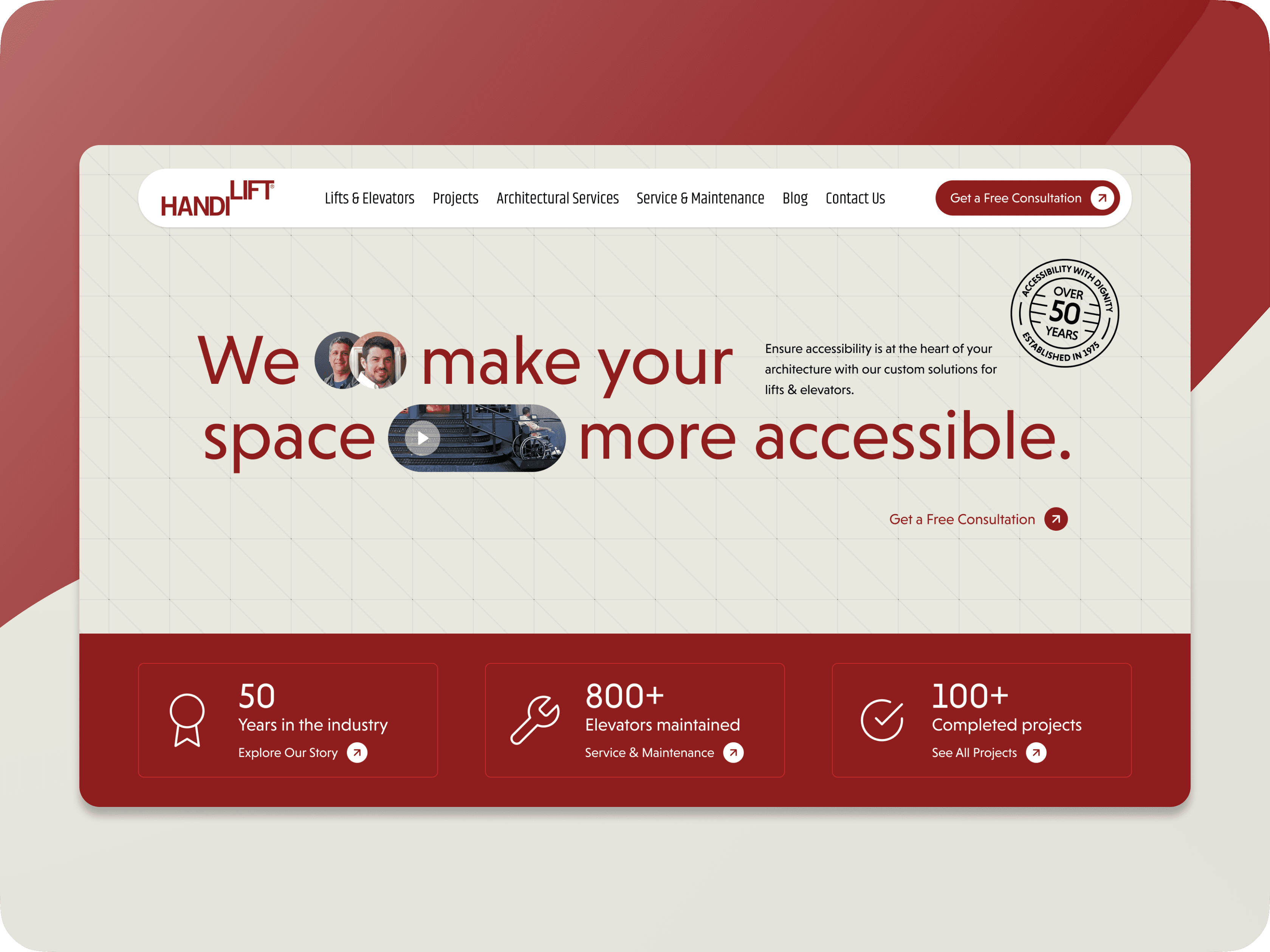
This project focused on redesigning the Handi-Lift website to create a more modern, accessible, and engaging digital experience. The goal was to better reflect the company’s values while improving usability for a diverse audience that includes architects, homeowners, property managers, and business owners.
Working with a cross-functional team of strategists, developers, and product stakeholders, I helped transform the site into a scalable and user-centered platform. The redesign introduced a clearer content structure, a modern visual identity, and a reusable design system that supports both user needs and long-term maintainability.
Project highlights
Led UX from research and wireframes through high-fidelity design and developer handoff.
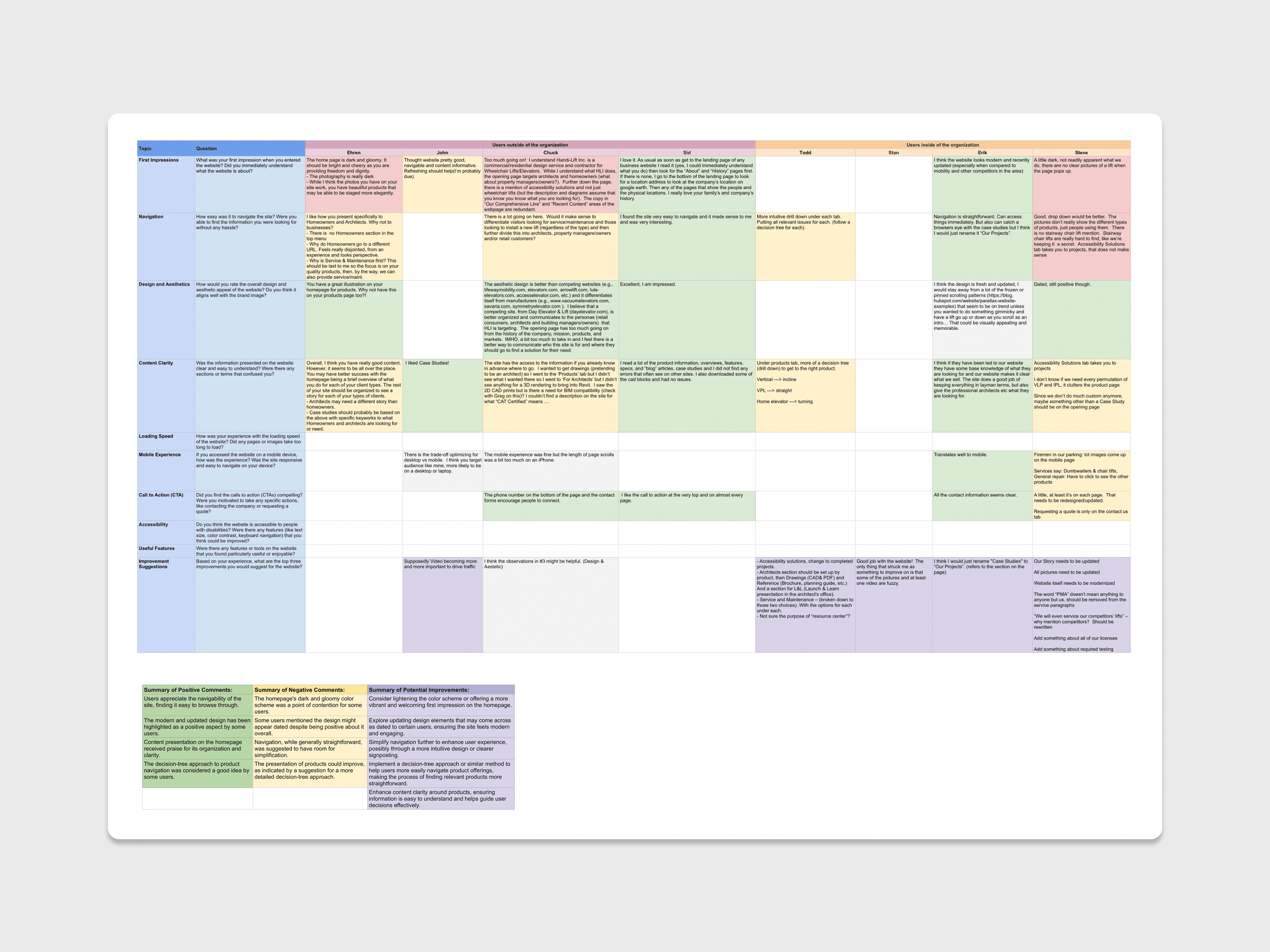
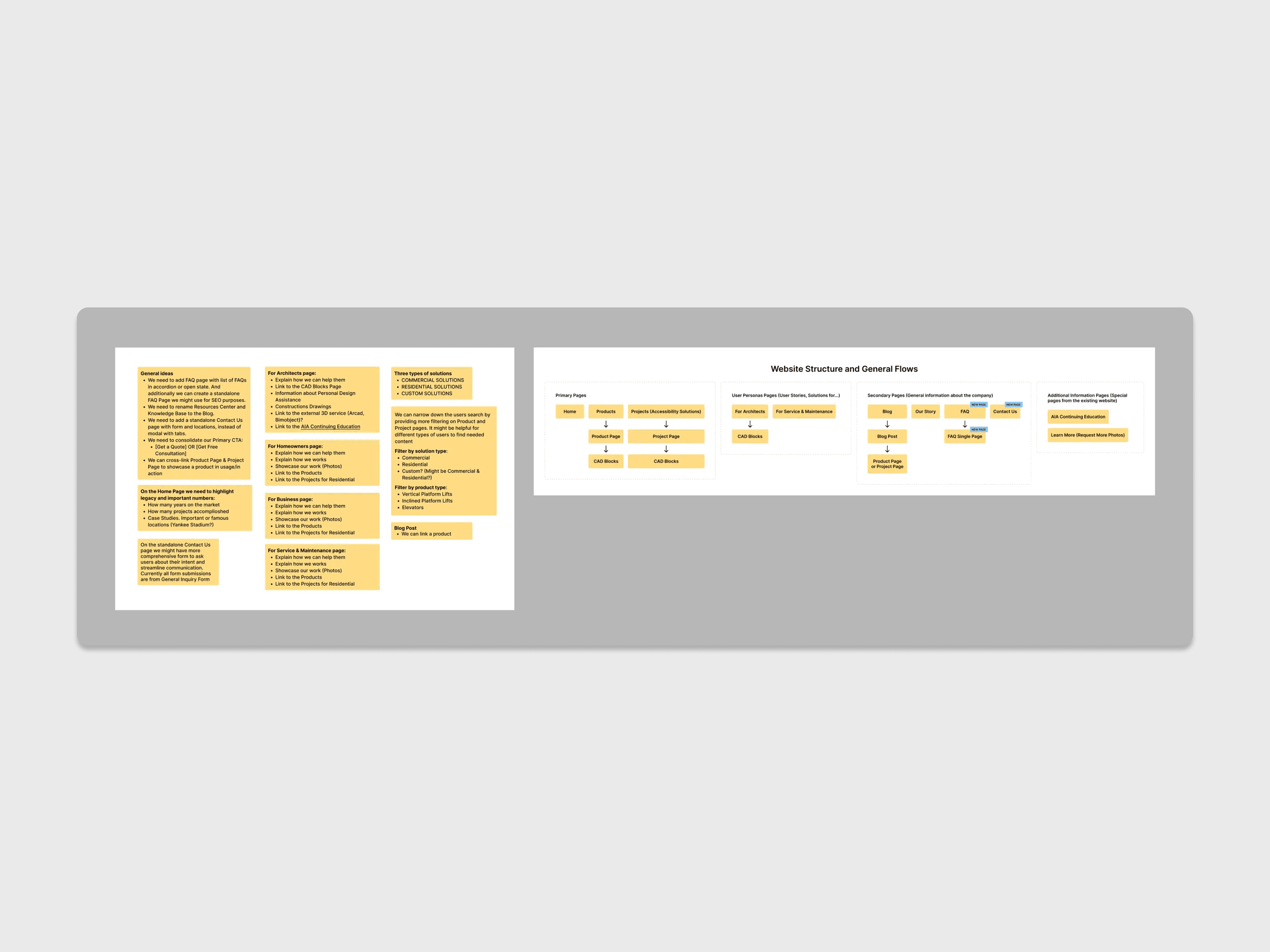
Used interviews, SEO, and analytics to guide navigation and content-hierarchy decisions.
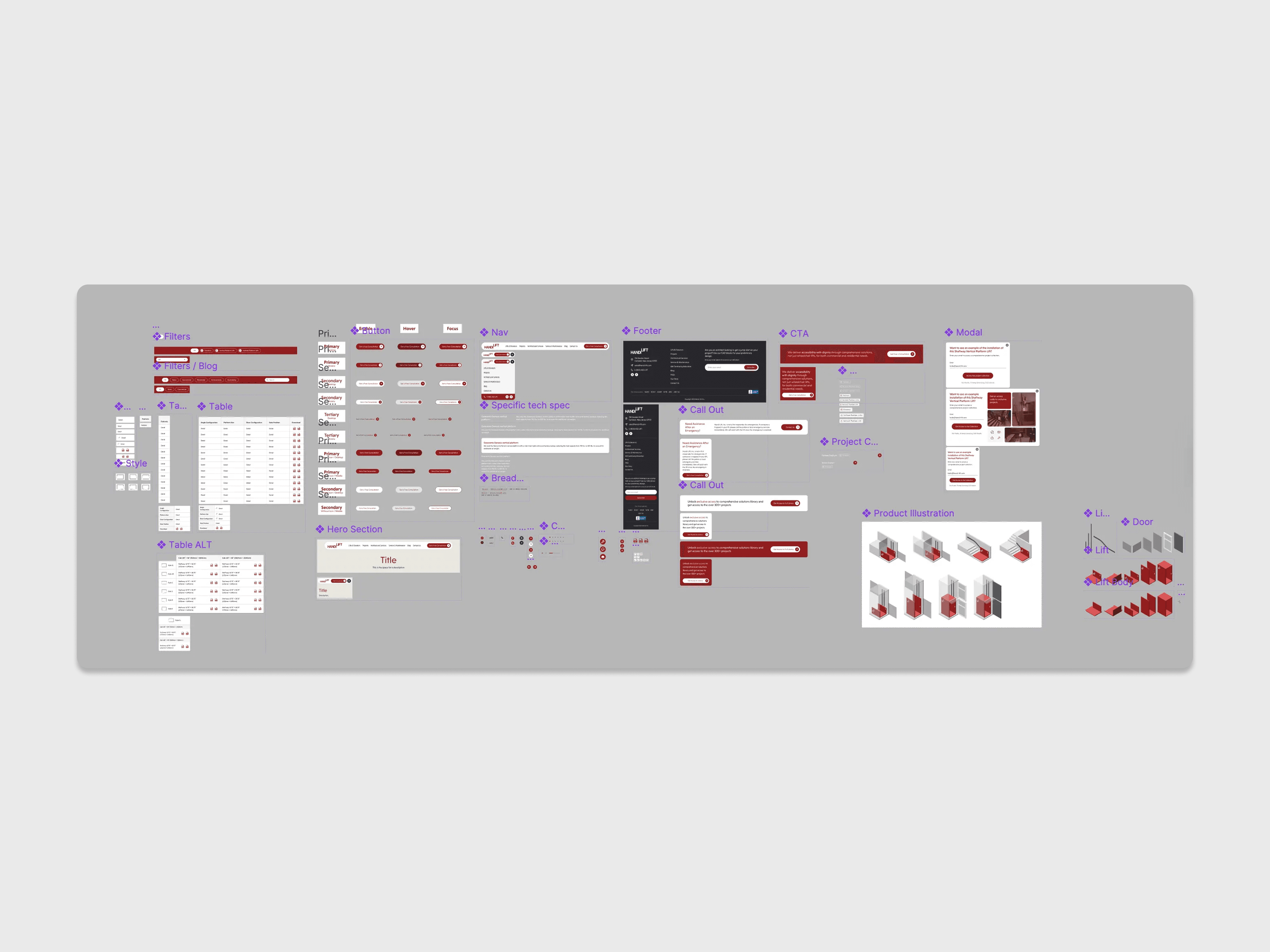
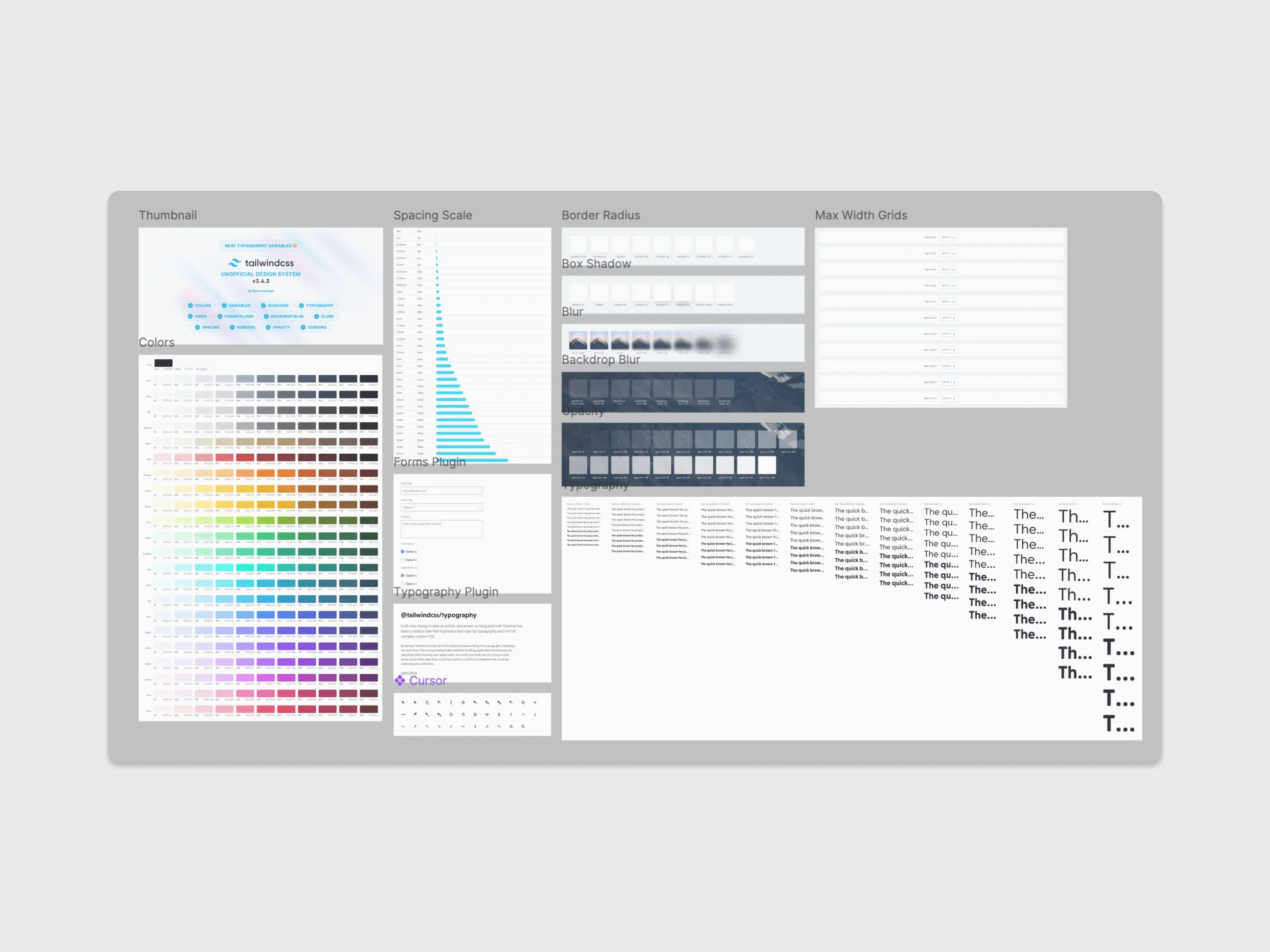
Created reusable components, typography rules, and design tokens for long-term consistency.
The challenge
The existing website had become outdated and no longer reflected the evolving needs of the company or its users. Visitors struggled to understand the full range of services offered, navigation made it difficult to locate key information, and the overall visual design felt dark and unwelcoming.
In addition, the site lacked strong conversion paths and clear calls to action, which limited its ability to generate leads. The platform also needed to support accessibility standards and communicate the brand more effectively while remaining flexible enough to grow as the business expanded its audiences.
My role
As the UX Designer on the project, I was responsible for leading the design process from early research and wireframes through high-fidelity design and developer handoff. My work focused on improving the site’s information architecture, designing the user interface, and creating a scalable design system that could support future growth.
I collaborated closely with strategists, developers, and stakeholders throughout the process to ensure that design decisions aligned with business goals, user needs, and technical requirements. This included delivering interactive prototypes in Figma and documenting components and design tokens to support implementation.
Process
The project began with a discovery phase that combined user interviews with SEO and analytics analysis to better understand user behavior and identify opportunities for improvement. These insights helped guide decisions around navigation, content hierarchy, and the overall structure of the site.
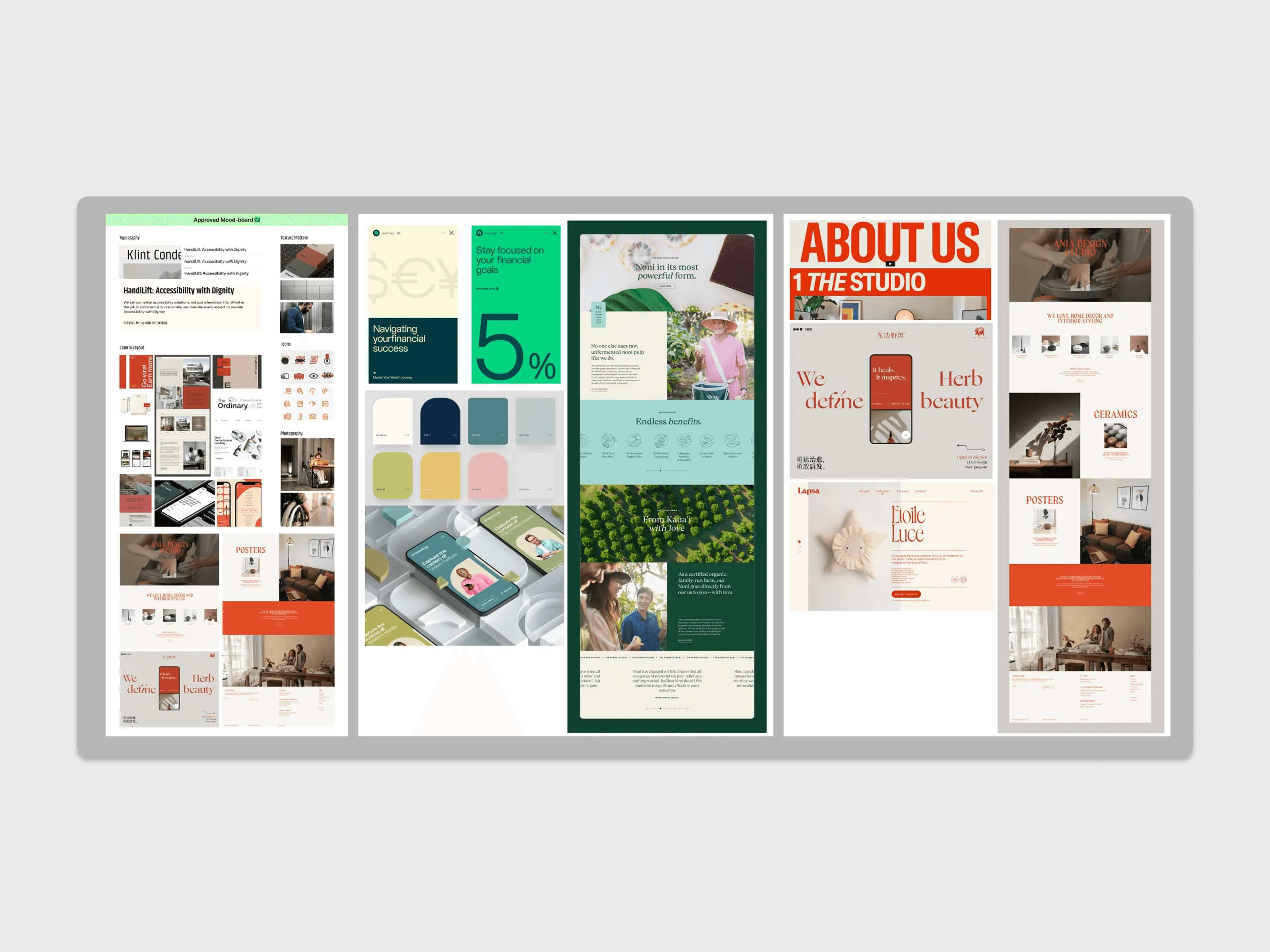
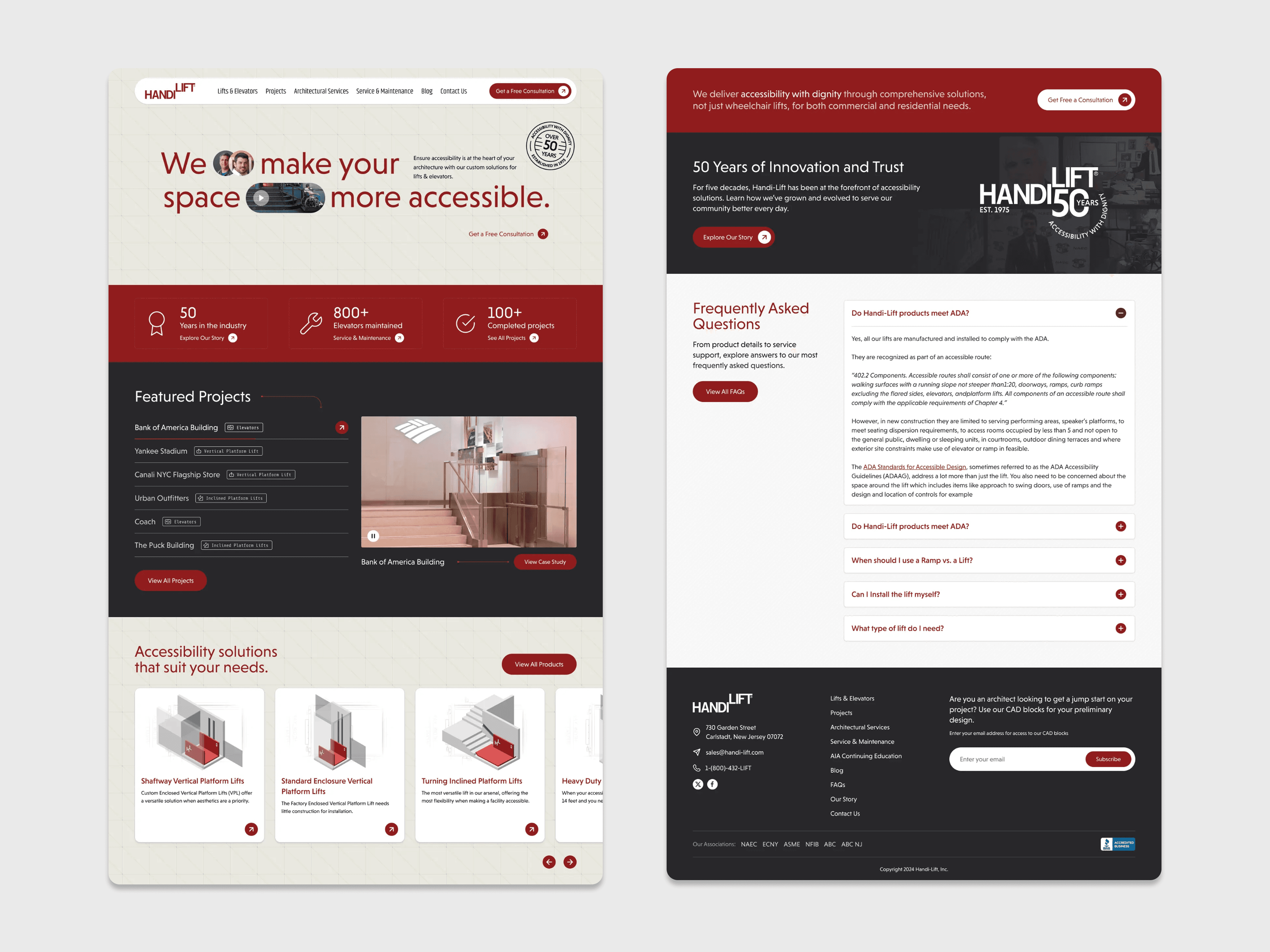
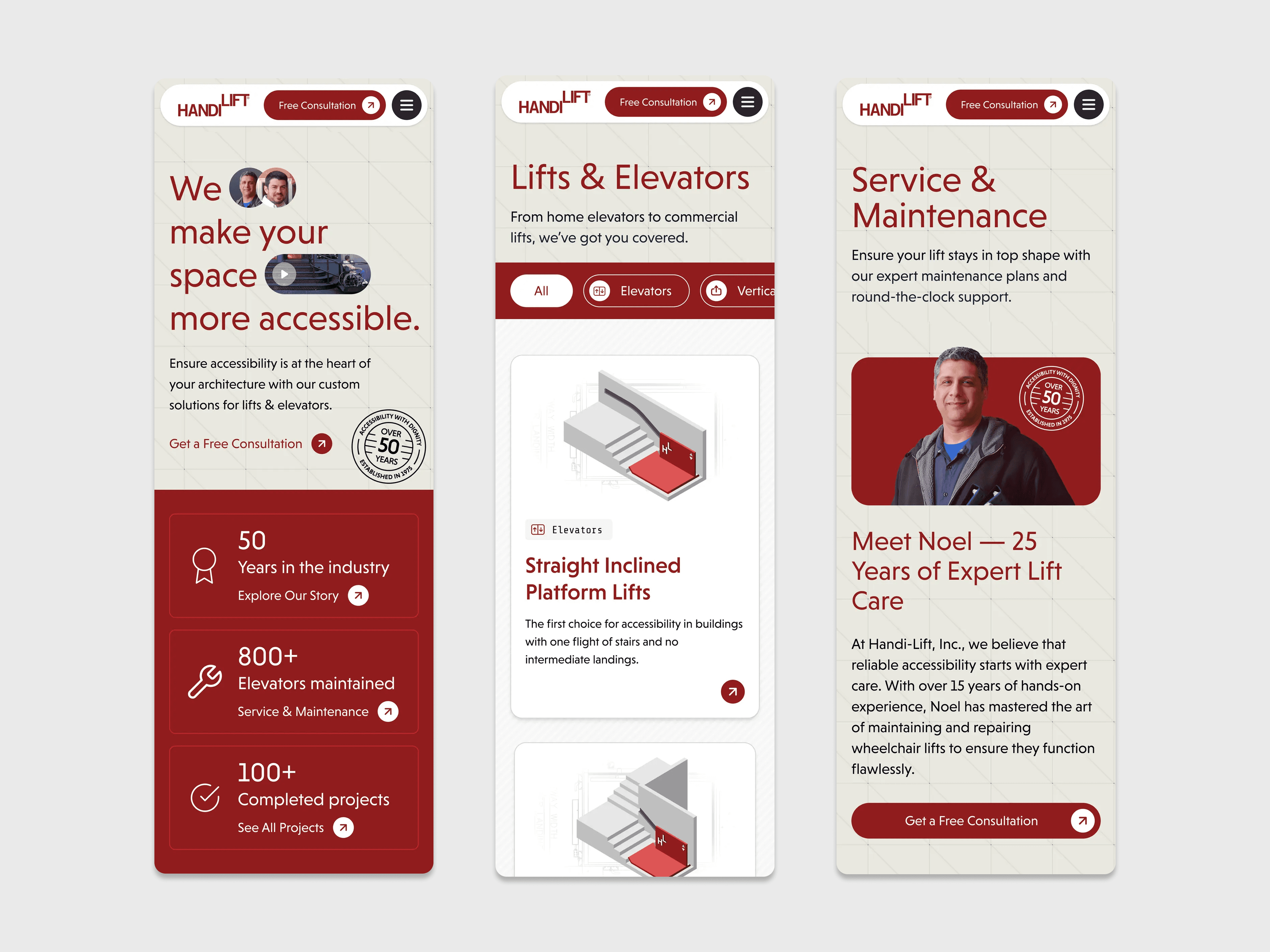
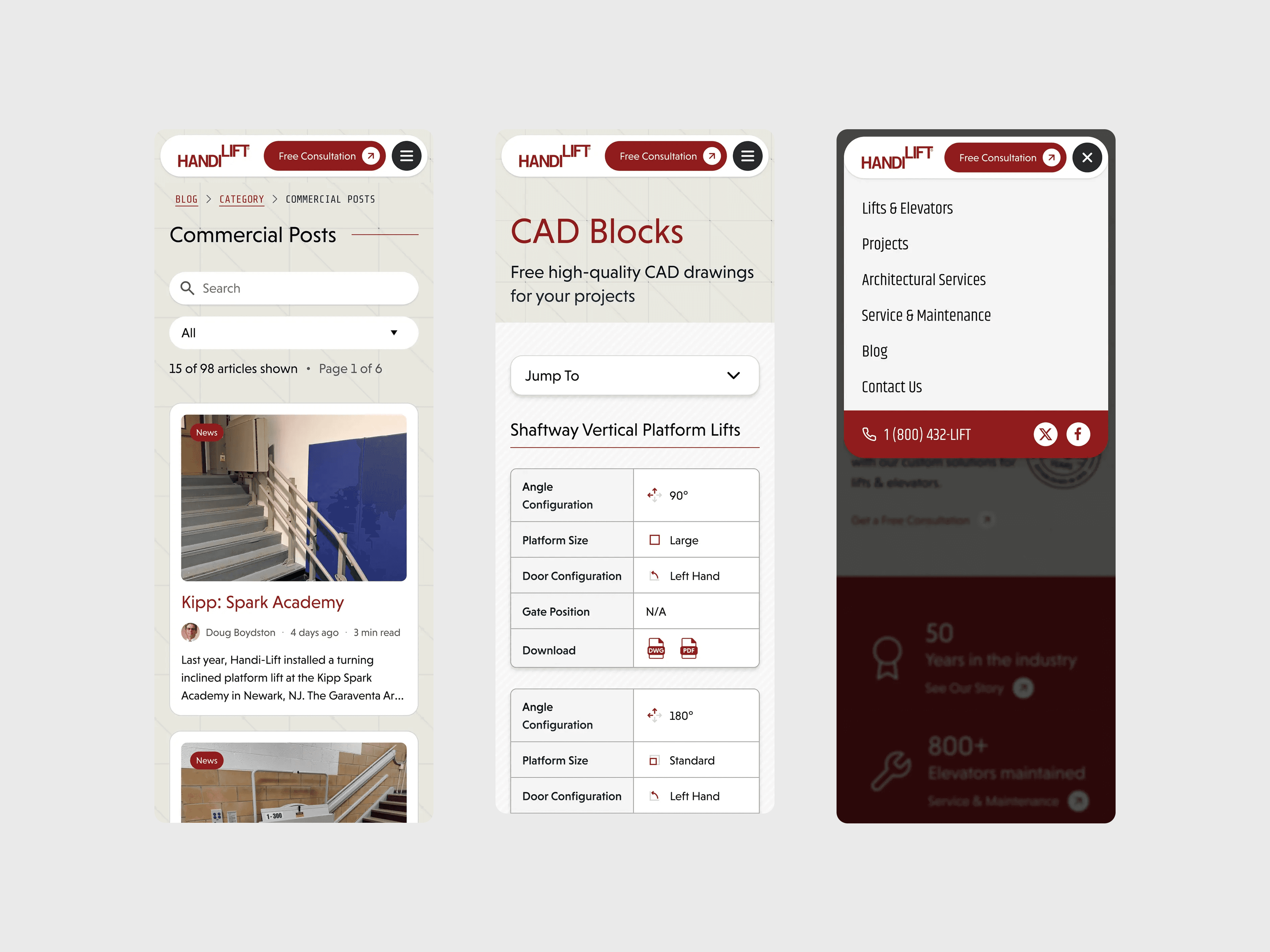
From there, I developed a new visual direction through moodboards and built a modular design system composed of reusable components, typography rules, and design tokens. The navigation and content structure were redesigned to better communicate services and support multiple user groups, while the visual design introduced a brighter and more welcoming aesthetic supported by simplified vector-based product illustrations.
Outcome
The redesigned website created a clearer and more engaging digital experience that better communicates Handi-Lift’s services and values. Improved navigation and content structure make it easier for users to find relevant information, while clearer calls to action support stronger lead generation and engagement.
The new design system also provides a scalable foundation for future development, allowing the internal team to maintain consistency across the site while expanding content and functionality as the business continues to grow.
Key design decisions
Reflection